

Webhooks
What is a Webhook?
A Webhook is a way for one application to automatically send information to another application when something happens.
Instead of continuously asking a server whether something has changed, the application simply waits for an event and receives a notification when it happens.
Simple Example
Imagine you ordered something online.
Instead of repeatedly asking:
"Has my order been delivered?"
your delivery company automatically sends you a notification when the order is delivered.
That notification is similar to how a webhook works.
How Does a Webhook Work?
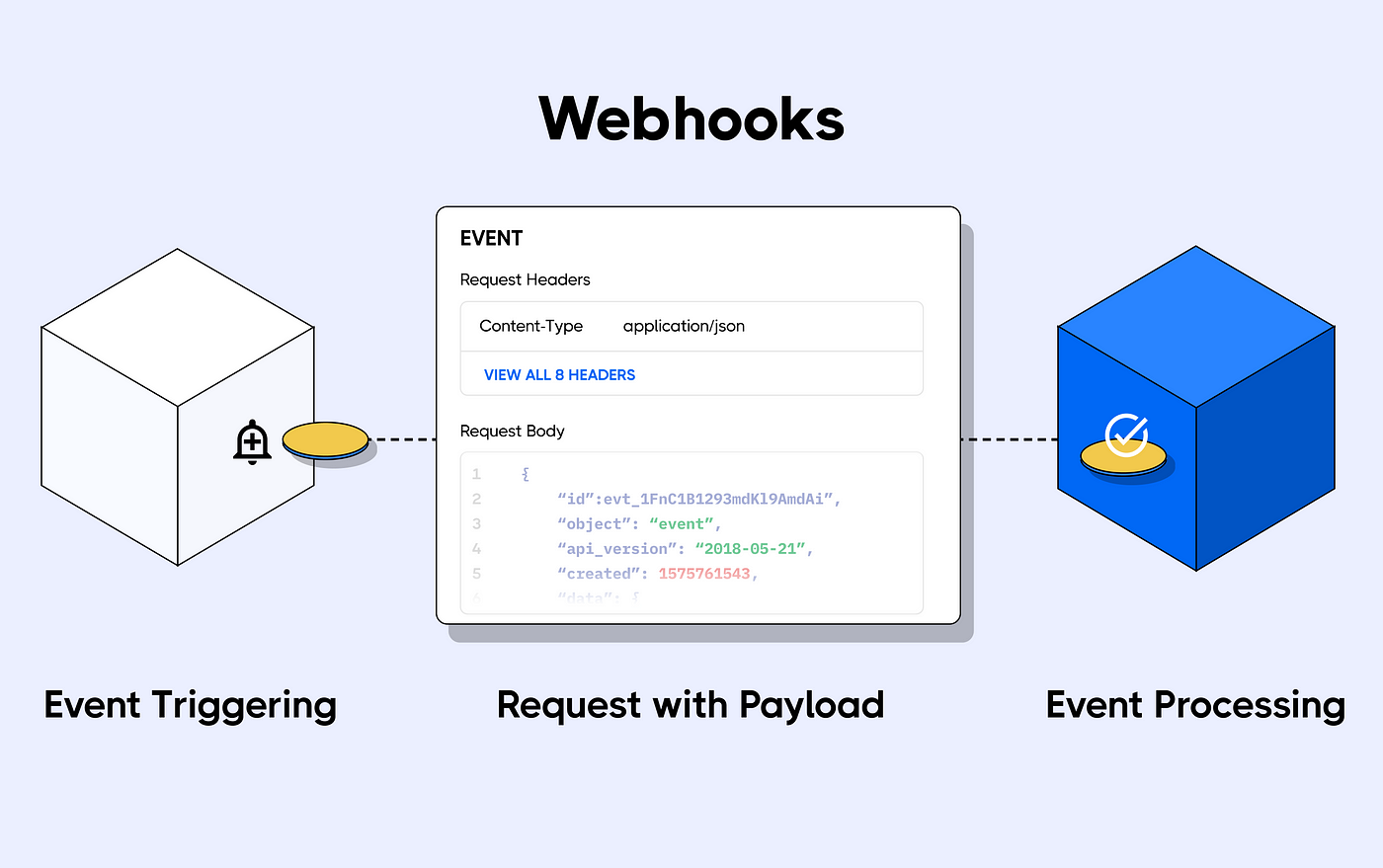
A webhook usually follows these steps:
- Event happens — for example, a payment is completed.
- Service detects the event.
- Service sends an HTTP request to a URL provided by another application.
- The receiving application processes the data.
- A response is returned to confirm that the request was received.
For example:
Payment Service
      ↓
Payment Completed
      ↓
Webhook Request
      ↓
Your Server
      ↓
Process Payment
Webhook vs API
They may look similar, but their purpose is different.
| API | Webhook |
|---|---|
| You request information | Information is pushed to you |
| Client starts communication | Event starts communication |
| Usually request → response | Usually event → HTTP request |
| Good for fetching data | Good for receiving real-time events |
Example
With an API:
"Give me the latest payment status."
With a webhook:
"Tell me automatically when a payment is completed."
Webhooks in FastAPI
FastAPI can create an endpoint that receives webhook requests.
from fastapi import FastAPI, Request

app = FastAPI()

@app.post("/webhook")
async def webhook(request: Request):
    data = await request.json()
    print(data)

    return {"status": "received"}
When another service sends a POST request to /webhook, FastAPI receives the data and processes it.
For example, the incoming data might look like:
{
    "event": "payment_success",
    "amount": 500,
    "user": "charan"
}
Your FastAPI application can then perform an action such as updating a database, sending an email, or creating an order.
Where Are Webhooks Used?
Webhooks are commonly used for:
- Payment notifications
- Order and delivery updates
- Authentication events
- Messaging systems
- CI/CD pipelines
- Email events
- E-commerce applications
- Real-time notifications
- Connecting different applications
Important Security
A webhook endpoint is exposed to the internet, so you should not blindly trust incoming requests.
Professional webhook systems commonly use:
- Signature verification to confirm the request came from the expected service
- HTTPS to protect data during transmission
- Authentication or secret tokens
- Input validation
- Idempotency to prevent processing the same event twice
- Logging and monitoring for failed requests
Webhook in One Sentence
A webhook is an event-based HTTP callback where one application automatically sends data to another application when a specific event occurs.
Comments