

Python Classes and Objects-Part3
What is encapsulation?
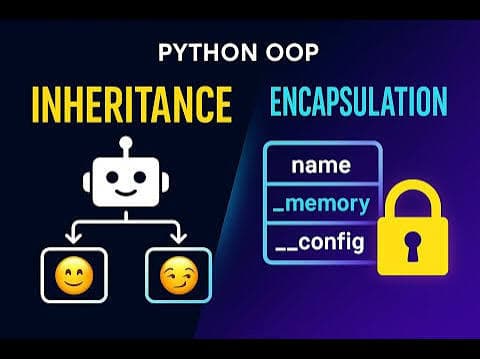
Encapsulation is mostly about protecting data inside a class.In this we can keep data and methods together inside a single class.and we can control who can acess it
for example, without encapsulation:
class Account:
    def __init__(self, balance):
        self.balance = balance

a1 = Account(1000)
a1.balance = -5000   # nothing stops this, which is wrong
with encapsulation:
class Account:
    def __init__(self, balance):
        self._balance = balance   # underscore means "internal use"

    def deposit(self, amount):
        self._balance = self._balance + amount

    def withdraw(self, amount):
        if amount > self._balance:
            print("Not enough balance")
        else:
            self._balance = self._balance - amount

    def get_balance(self):
        return self._balance

a1 = Account(1000)
a1.deposit(500)
print(a1.get_balance())   # 1500
a1.withdraw(3000)         # Not enough balance
Now the balance can only change through deposit and withdraw, not directly.
Why do we need encapsulation?
Because it stops wrong or invalid data from being stored, and keeps all the rules about changing the data in one place.
What is inheritance?
In a class we can use methods and properties from another class.this makes easy to use methods and properties.
for example:
class Employee:
    def __init__(self, name):
        self.name = name

    def show(self):
        print("Name:", self.name)


class Manager(Employee):
    def __init__(self, name, team_size):
        super().__init__(name)
        self.team_size = team_size

    def show_team(self):
        print(self.name, "manages", self.team_size, "people")


m1 = Manager("Rohith", 8)
m1.show()         # Name: Rohith (inherited from Employee)
m1.show_team()    # Rahul manages 8 people
Here, Manager is getting show() from Employee without writing it again.
What is super()?
super() is used to call the parent class's method, mostly used inside __init__ so we don't repeat the same code.
for example:
class Manager(Employee):
    def __init__(self, name, team_size):
        super().__init__(name)   # this calls Employee's __init__
        self.team_size = team_size
What are parent class and child class?
- Parent class (is also called base class) = the original class
- Child class (is also called subclass) = the class that inherits from the parent
In our example:
- Employee = parent class
- Manager = child class
Can a child class have its own extra methods?
Yes. A child class can have all the parent's methods, plus its own new methods.
for example:
class Intern(Employee):
    def __init__(self, name, mentor):
        super().__init__(name)
        self.mentor = mentor

    def learn(self):
        print(self.name, "is learning from", self.mentor)


i1 = Intern("Dev", "Rohith")
i1.show()    # Name: Dev  (inherited)
i1.learn()   # Dev is learning from Rohith
Comments